How to Fall Asleep Fast When Your Mind Won't Stop
By Grant H. Caldwell, author of Sleep Hacks for Busy People
The direct answer: give your evening a clear ending, park tomorrow's tasks on paper, and stop trying to force sleep. A racing mind is usually unfinished business plus pressure — and both respond better to a small, repeatable routine than to lying in bed willing yourself to drop off.
The tips below come from Sleep Hacks for Busy People, which collects 101 practical tips for busy people. Each one takes minutes, not an evening overhaul.
1. Create a clear cue that work is over
When your workday ends, give it a closing moment: close the laptop, silence work notifications, and put away papers and equipment you will not need again tonight. Repeat the same brief sequence most evenings — for example, take two minutes to review tomorrow's calendar, write down your top priority, then shut the computer and turn off alerts. If you work remotely, physically putting your laptop in a drawer makes the boundary visible. You are not trying to switch off every thought instantly; you are showing yourself that work is no longer the evening's main activity.
2. Park tomorrow's tasks with a two-minute brain dump
Unfinished tasks keep the mind active after work ends, so give those thoughts a place to wait until morning. Take two or three minutes before bed to write down tasks, reminders, and loose ends in a notebook or a simple list — without sorting them perfectly. The aim is to record, not resolve. If a task seems complicated, give it a short label, such as "Review budget figures," rather than starting the work itself. Once the thought is safely on the page, it has a place to wait until tomorrow.
3. Block the light leaks in your bedroom
Light is a strong signal about whether it is time to be awake or wind down, and you do not need a perfectly dark room to benefit. After dark, when your eyes have adjusted, look for streetlight slipping around the curtains, light under the door, glowing chargers, bright clock displays, and standby lights. Start with the source: turn a clock toward the wall, cover a tiny indicator light with a removable cover, or unplug a device you do not need overnight. For hallway light, try a door draft stopper or a dimmer light nearby.
4. Set a caffeine cutoff that fits you
Caffeine does not disappear as soon as you stop feeling its buzz. For many people, roughly half of a serving may remain in the system about five hours later, so an afternoon coffee can still influence your ability to fall asleep even if you feel calm by evening — you might fall asleep but find it takes longer, or notice lighter, less refreshing sleep. Instead of a universal cutoff, watch your own pattern: if bedtime is around 10 p.m. and sleep feels slow, try moving your last coffee earlier and notice what changes over several days.
5. If you nap, keep it short and timed
For a quick reset, aim for about 10 to 20 minutes of rest, in the early or mid-afternoon when many people naturally feel a dip in energy. Set an alarm before you settle in and choose a quiet place where you can relax without worrying about oversleeping. Think of the timer as a limit on your rest period, not a guarantee you will sleep the full time — a few minutes to drift off is fine, and quiet rest still offers a pause from constant demands.
6. Take the pressure off a difficult night
One restless night happens to most people, and sleep is an automatic process, not a task you can complete through effort — the harder you try to make it happen, the more alert and frustrated you may feel. If you are lying awake, remind yourself that you do not need to produce a perfect night; your job is simply to give yourself a comfortable chance to rest. Unclench your jaw, let your shoulders drop, and breathe at an easy pace. If you feel increasingly tense in bed, move to a dim, comfortable spot and do something low-key until you feel sleepy again.
7. Start with one or two changes, not all of them
You do not need to use every tip at once. Notice what most often gets in the way — bedtime shifting because work runs late, afternoon coffees carrying you through meetings, messages pulling you back to your laptop, or a warm, noisy bedroom — then pick one practical response: move your last coffee earlier, silence work notifications at a set time, or cool the room before bed. Look for a pattern across several days, not just one difficult night, and keep what helps.
Frequently asked questions
Why does my mind race at bedtime?
Unfinished tasks and open loops keep the mind active after work ends, and trying hard to force sleep can add pressure that keeps you alert. A closing cue plus a written brain dump addresses both causes at once.
How long should a wind-down routine take?
As long as your real evening allows. If you usually have only 30 minutes between finishing work and bed, do not build an hour-long routine. A modest plan you can follow most nights beats an ideal plan that regularly falls apart, and on late nights a short version — close work apps, note tomorrow's first task, change clothes, five quiet minutes away from your desk — keeps the habit alive.
Does an afternoon coffee really affect sleep if I feel calm by evening?
It can. Caffeine is processed gradually, and roughly half of a serving may remain about five hours later, so the effect may be subtle: sleep that takes longer to arrive or feels lighter and less refreshing.
When should I talk to a professional about sleep?
Sleep Hacks for Busy People covers what to do on rough nights and the signs it is time to talk with a professional, plus how to prepare for that conversation. This article is general information, not medical advice — if sleep problems persist, consult a qualified healthcare professional.
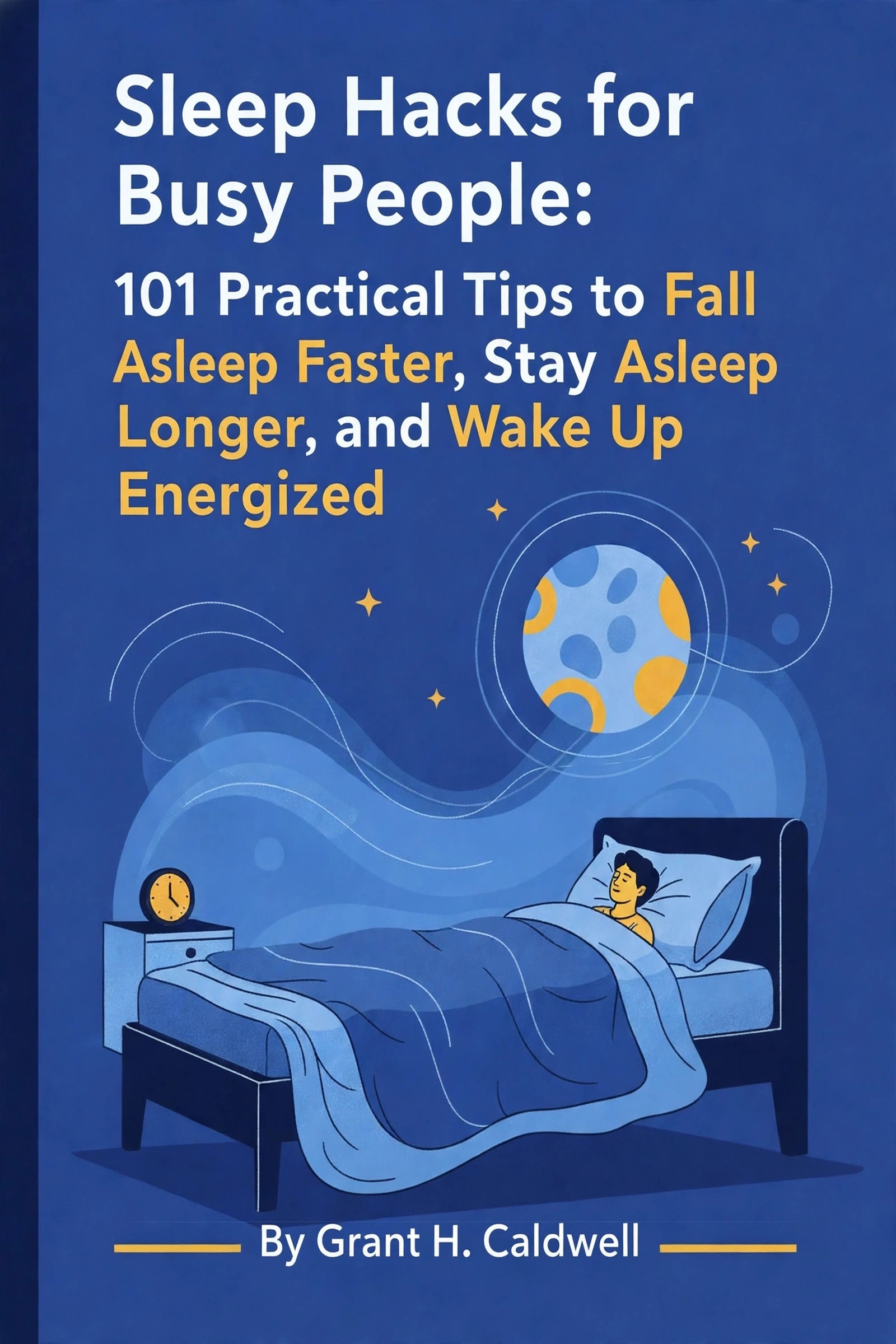
Keep going with the book
Sleep Hacks for Busy People — 101 Practical Tips to Fall Asleep Faster, Stay Asleep Longer, and Wake Up Energized.
$2.99 launch price, Oct 23 – Nov 22, 2026$7.99 ebook on Google Play
Related reading
Evenings start at work: Desk Lunch Ideas That Beat the 3pm Slump covers workday eating defaults and a five-minute prep routine that stops the day from running into the night. For the full set of tips, see the 101 Tips series.
This book provides general information for educational purposes and is not medical advice. If sleep problems persist, please consult a qualified healthcare professional.